THE STOCKYARDS
The Bull
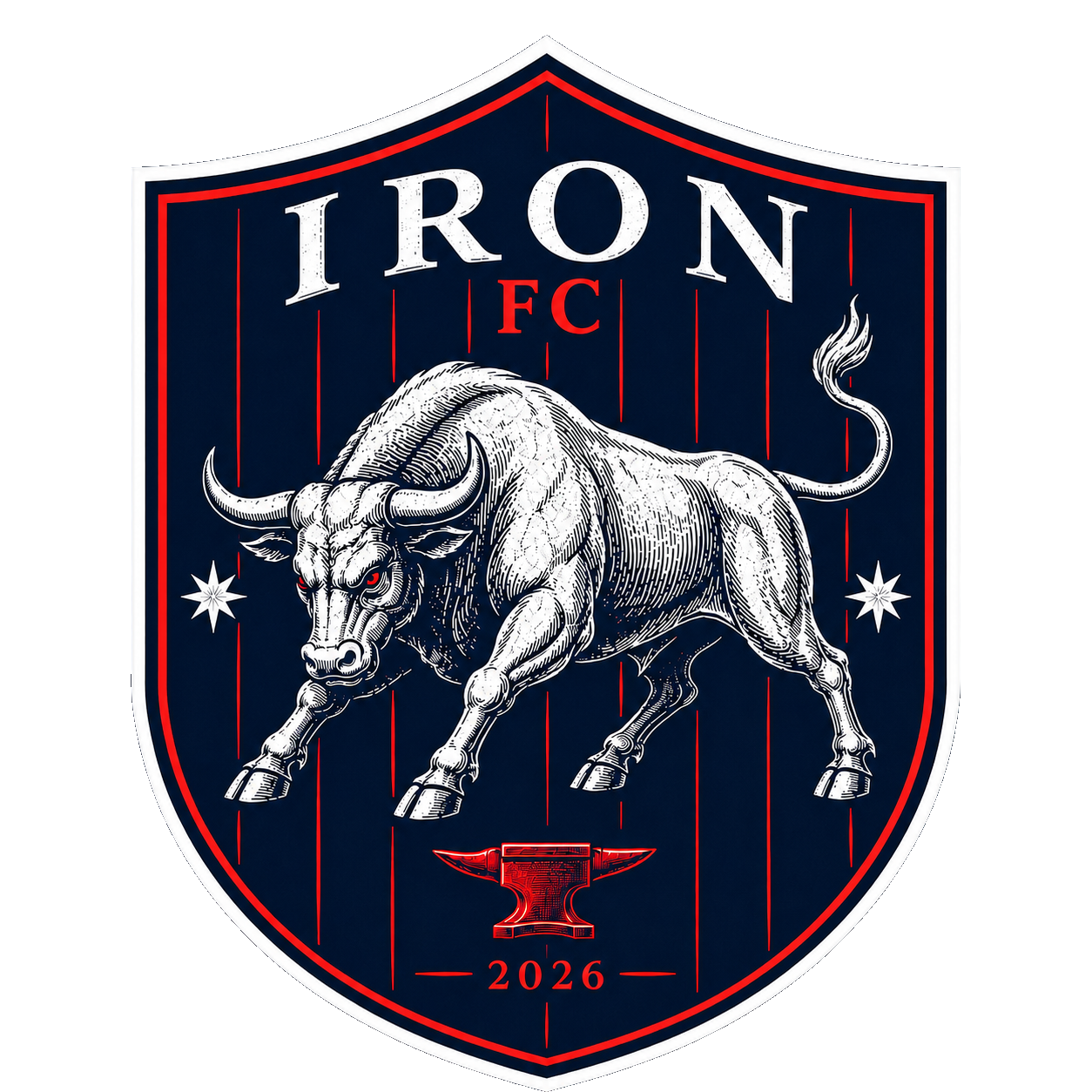
The charging bull ties Iron FC to the Kansas City Stockyards. Its posture and red eyes represent strength, focus, and forward pressure.
CLUB IDENTITY · EST. 2026
Every part of the badge connects to the same story: the Stockyards, working hands, football tradition, and a county building a club of its own.
 JACKSON COUNTY · 2026
A BADGE OF OUR OWN
The crest brings the Kansas City Stockyards together with the dignity of work and the shape of a traditional football shield.
It marks where the club comes from and the year its own history began.
THE ANATOMY
The charging bull ties Iron FC to the Kansas City Stockyards. Its posture and red eyes represent strength, focus, and forward pressure.
The anvil represents people who make, repair, teach, transport, care, and build. A football club is made through the same repetition and pressure.
The traditional shield gives the club a form meant to endure. Its white edge keeps the identity clear; the red inner line carries heat and resolve.
The vertical lines echo rail, ironwork, and the rhythm of a shift. They also connect the badge directly to the first-team shirts.
The twin starbursts are sparks struck from iron—the moment effort becomes movement.
The date records the year Jackson County Iron FC began: the first mark in a history the club intends to earn.
THE COLORS
Tradition, steadiness, and a club built for the long haul.
Clarity, discipline, and the contrast that keeps every mark sharp.
Heat, resolve, and sacrifice—used as an edge, not as noise.
The crest reflects where we come from. What matters now is what the club does on the pitch and in the community.
Explore the local history